
Last updated November 24, 2026
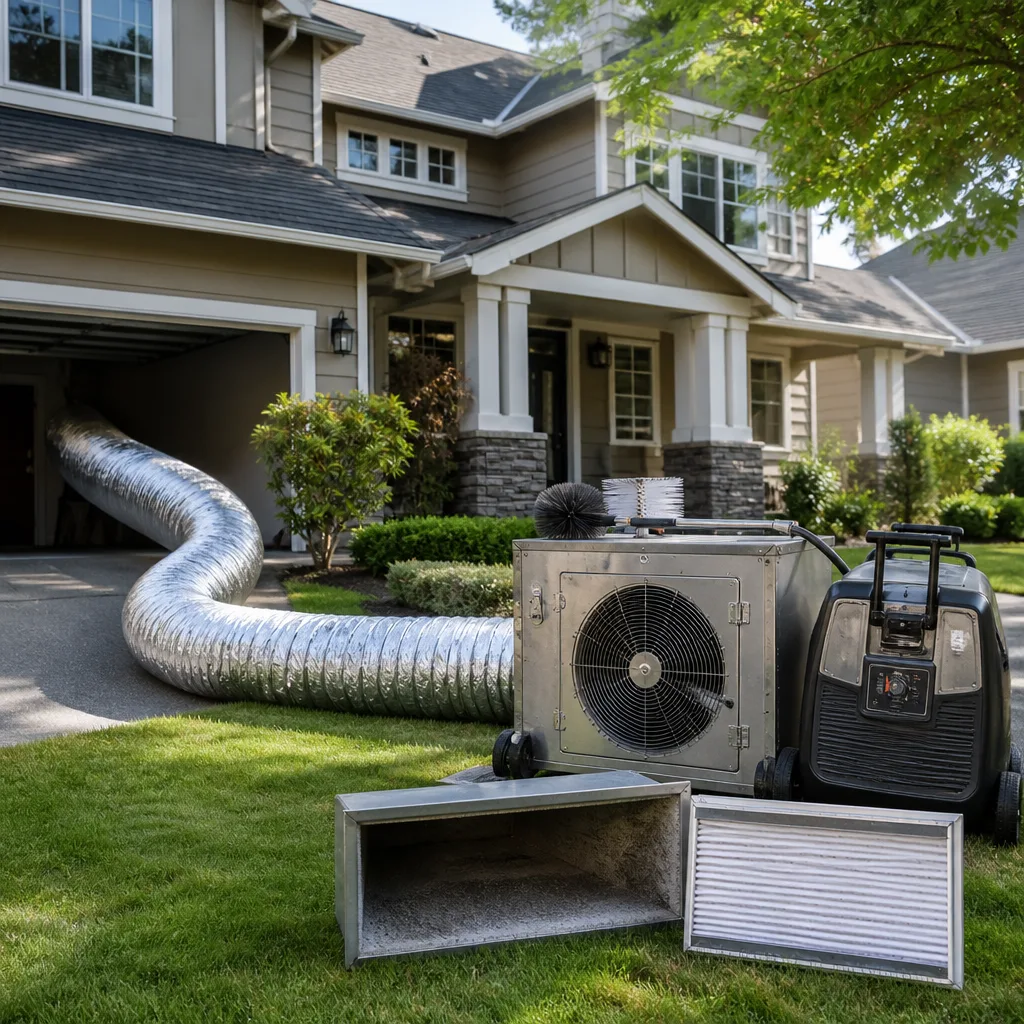 Whole-home duct cleaning
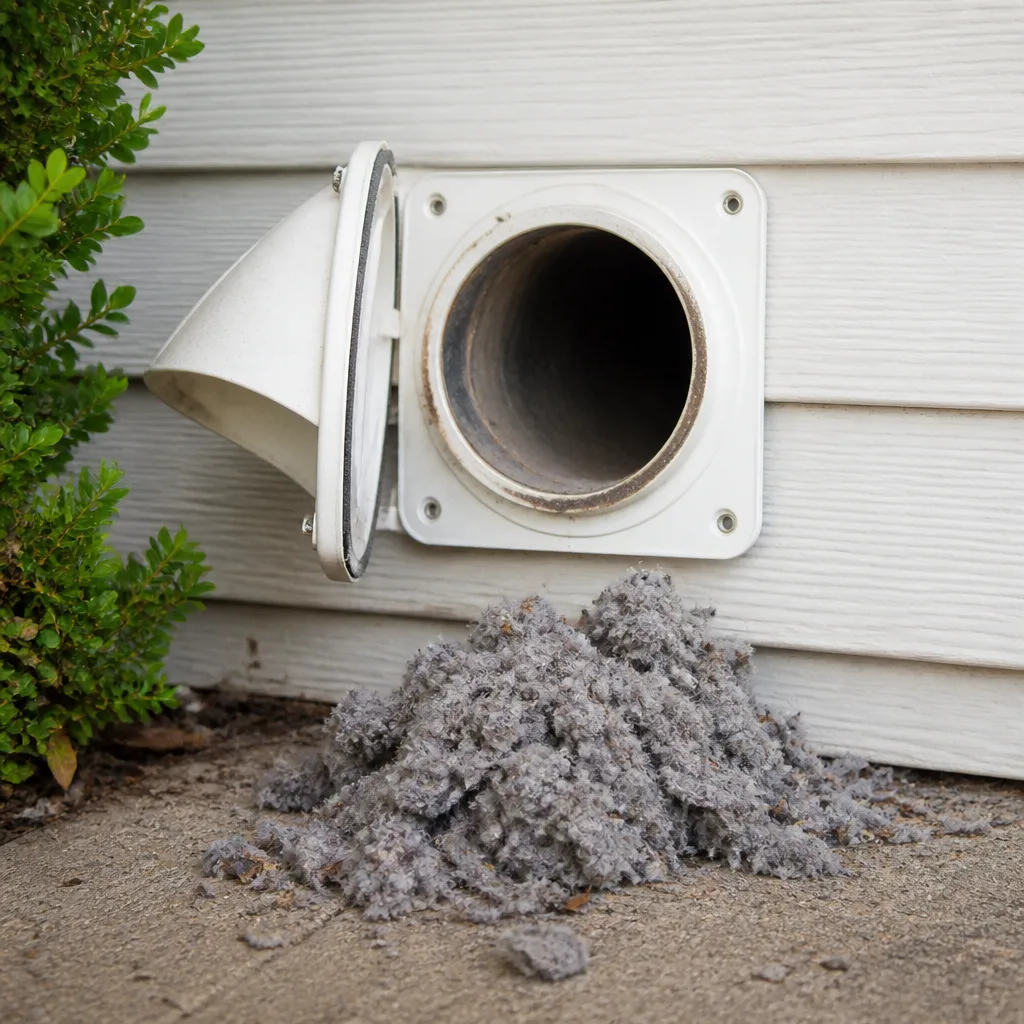 Dryer vent cleaning
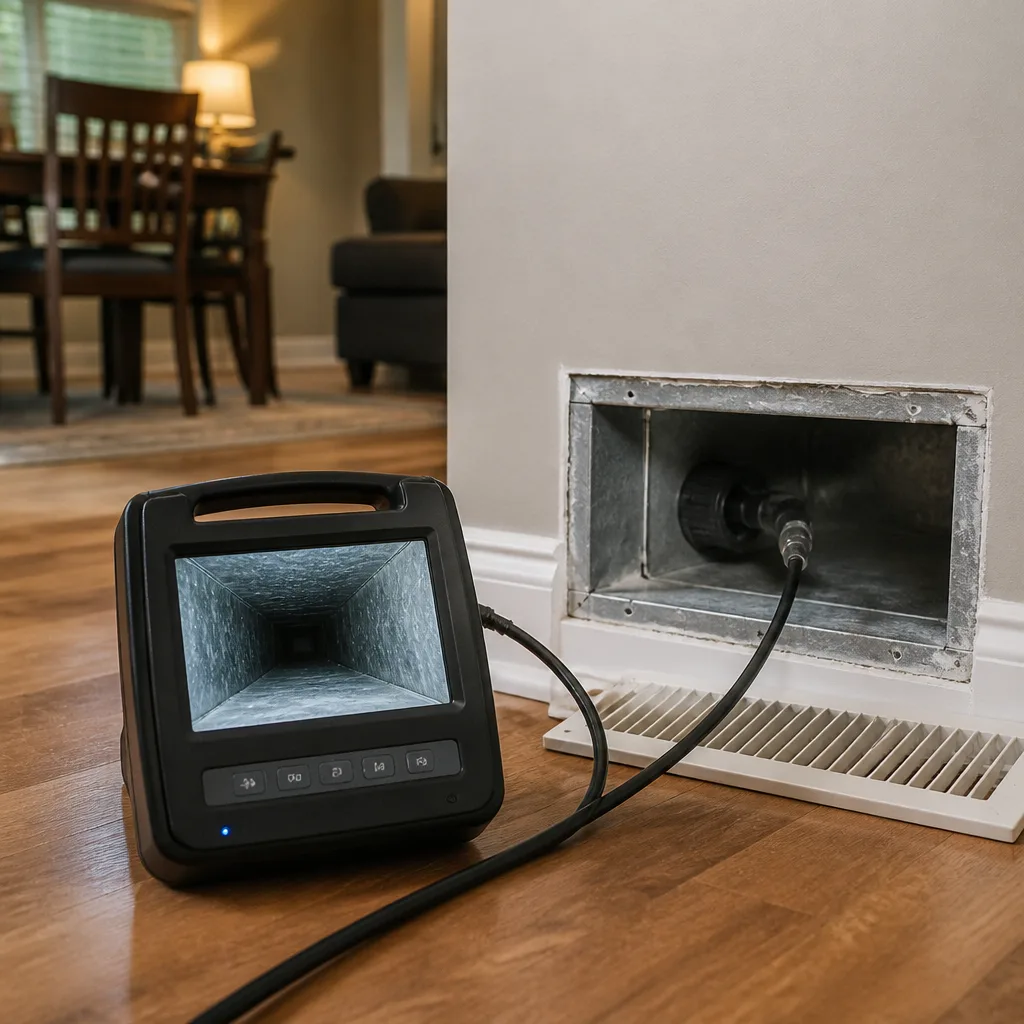 Camera inspection
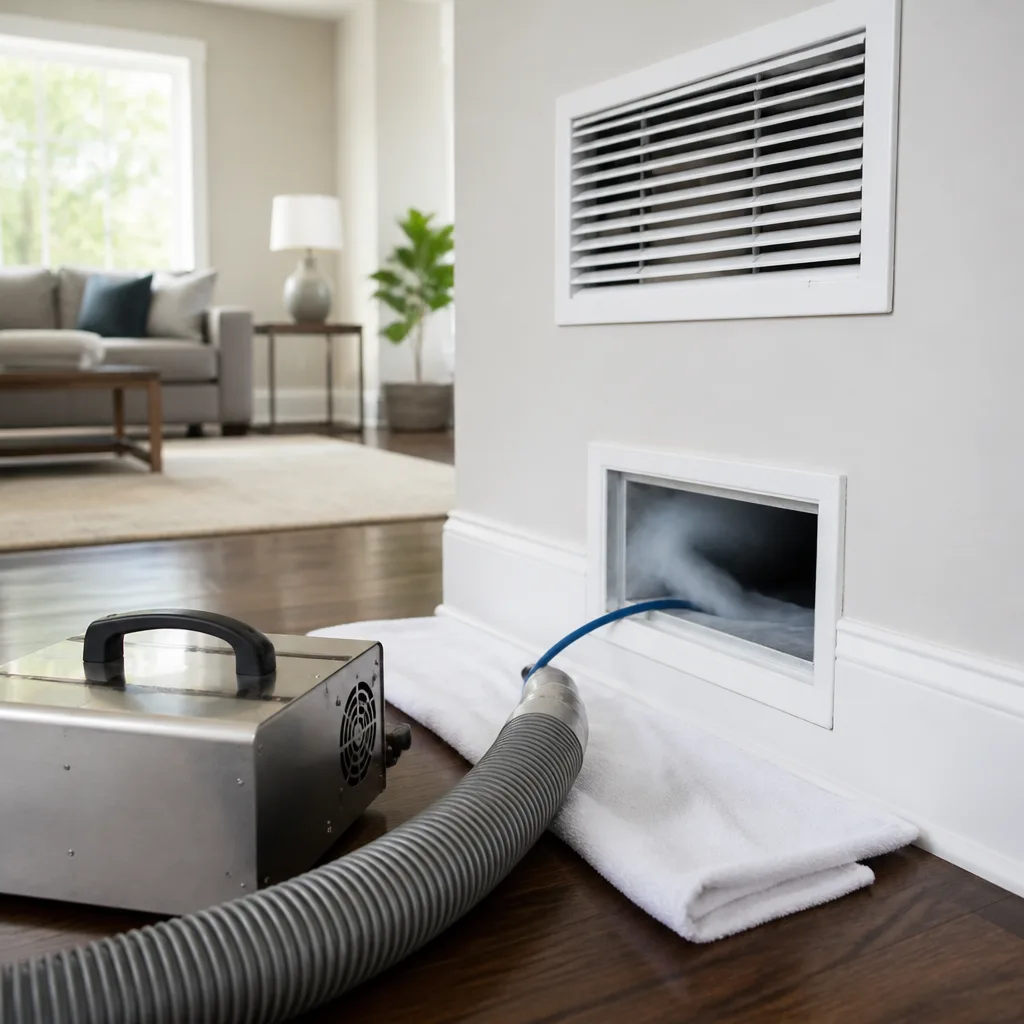 Sanitizing & deodorizing
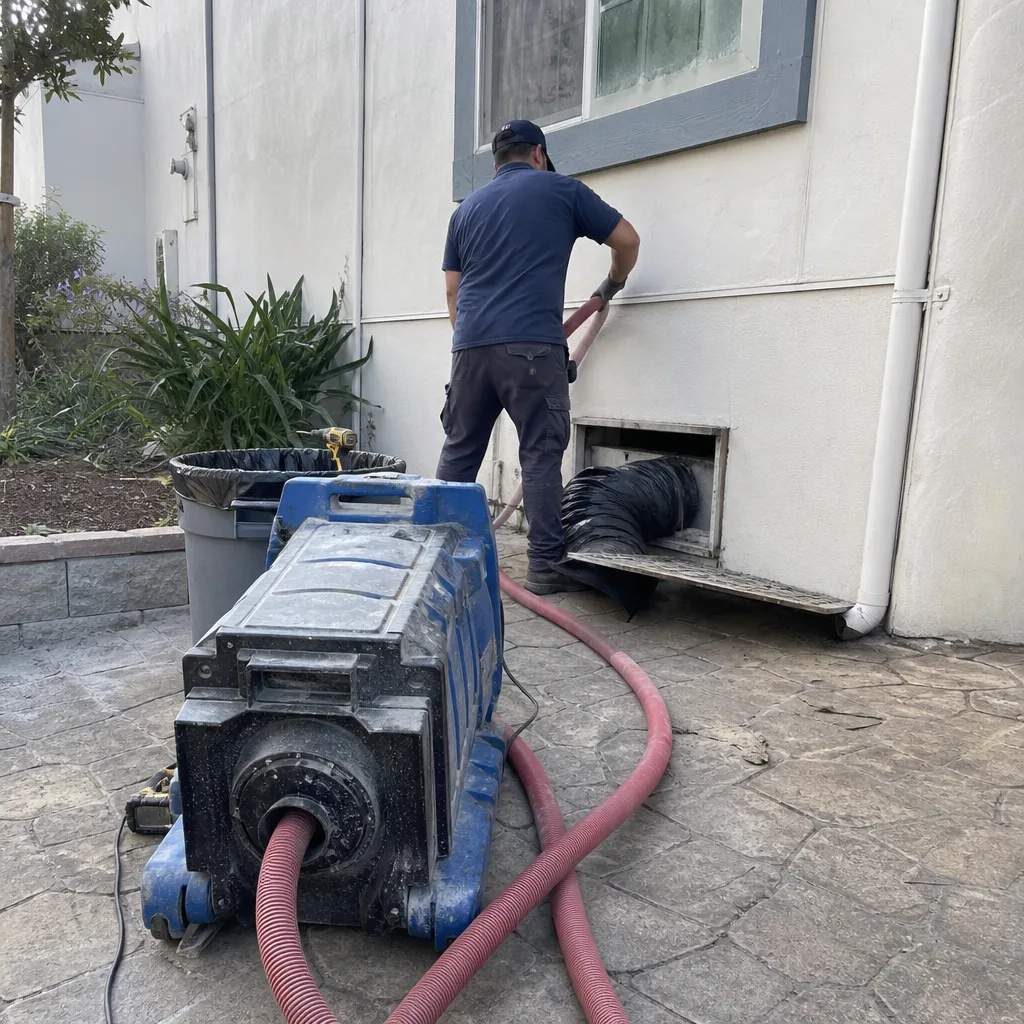
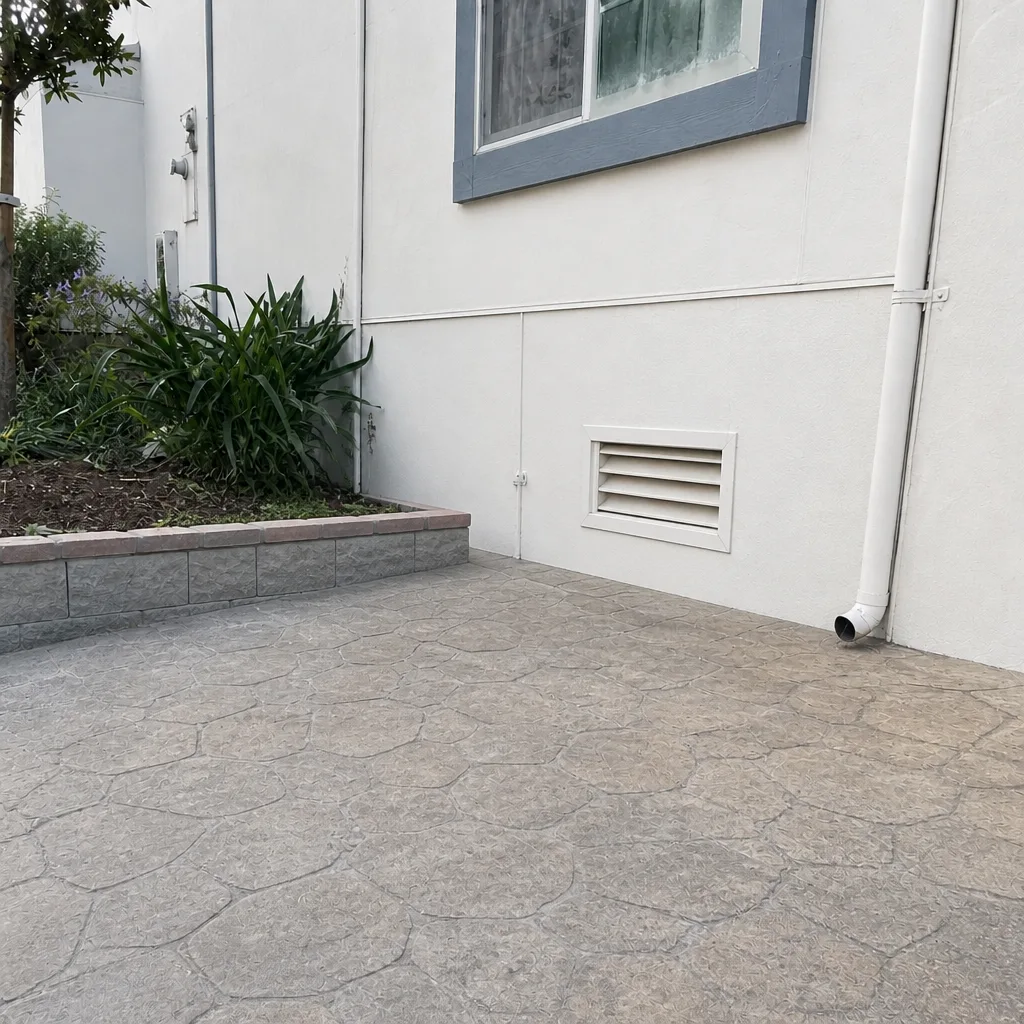
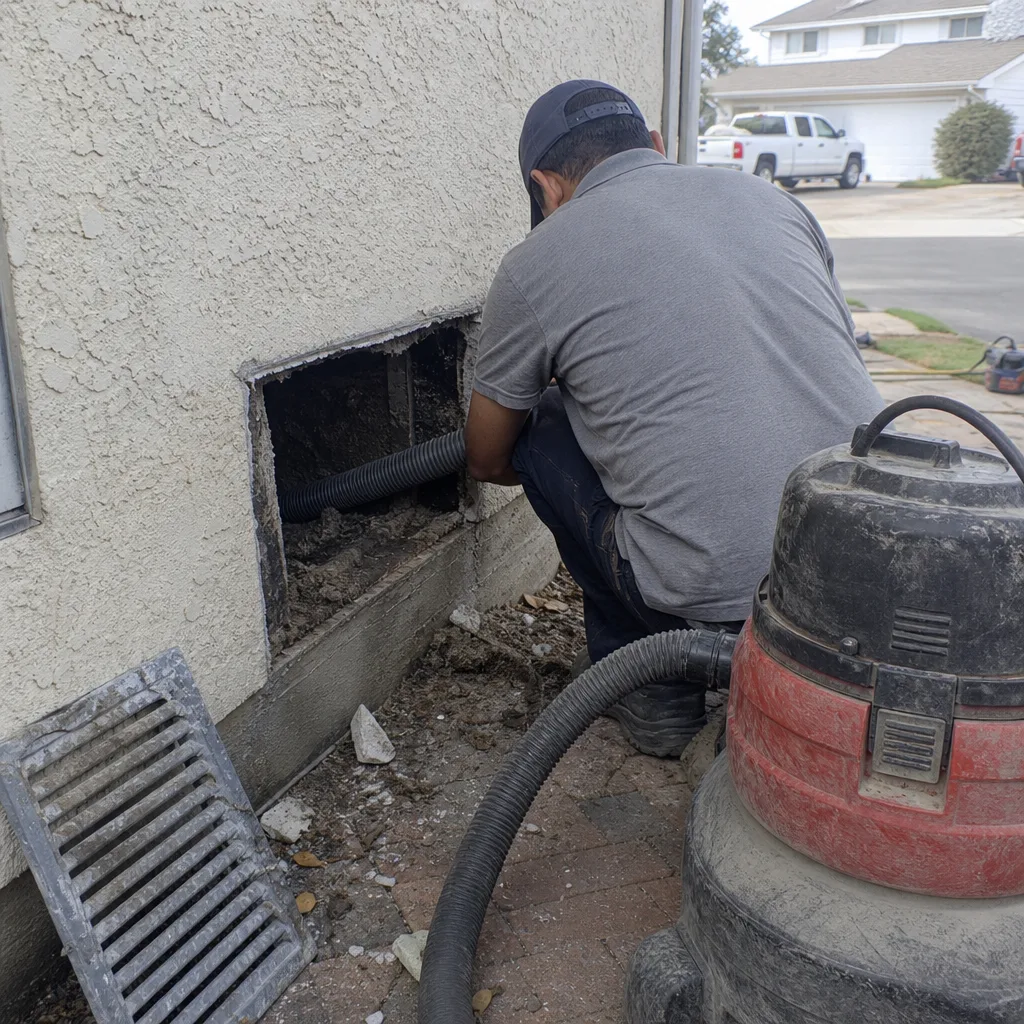
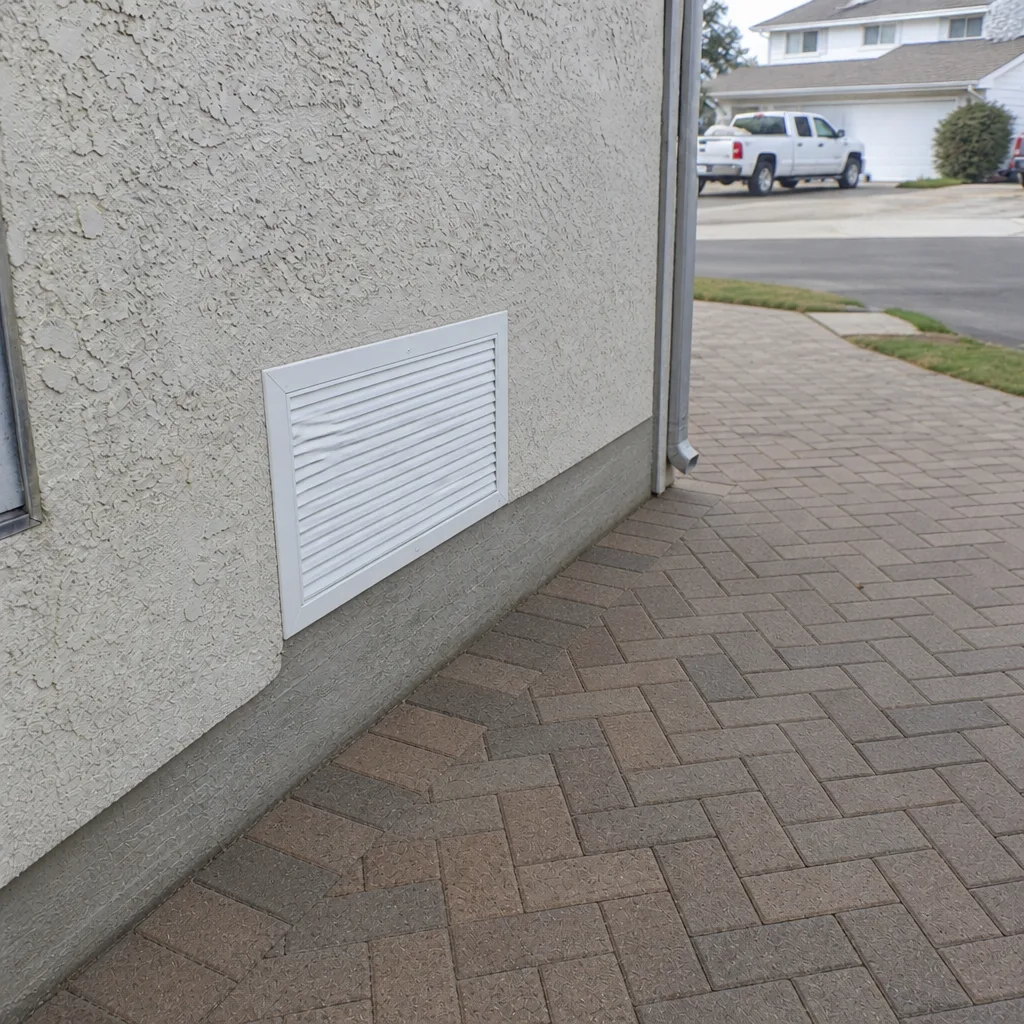
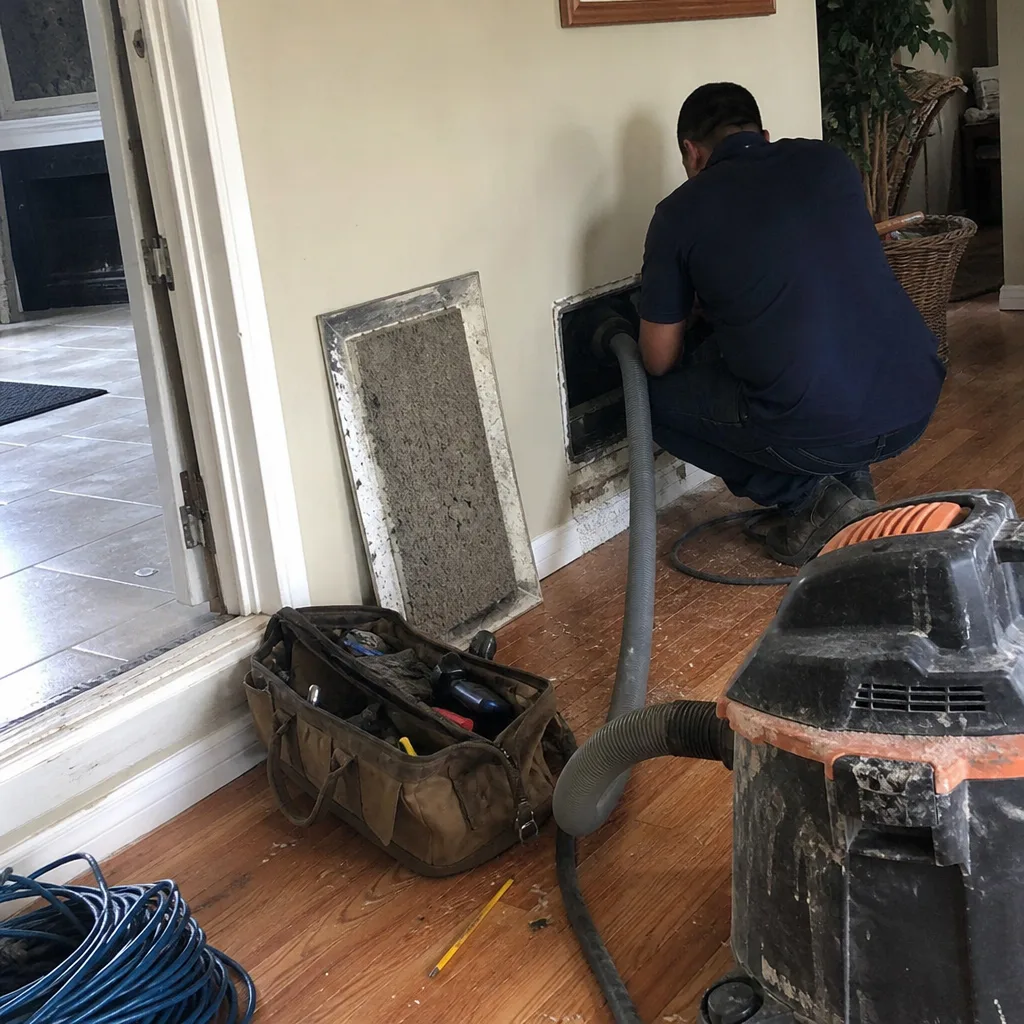
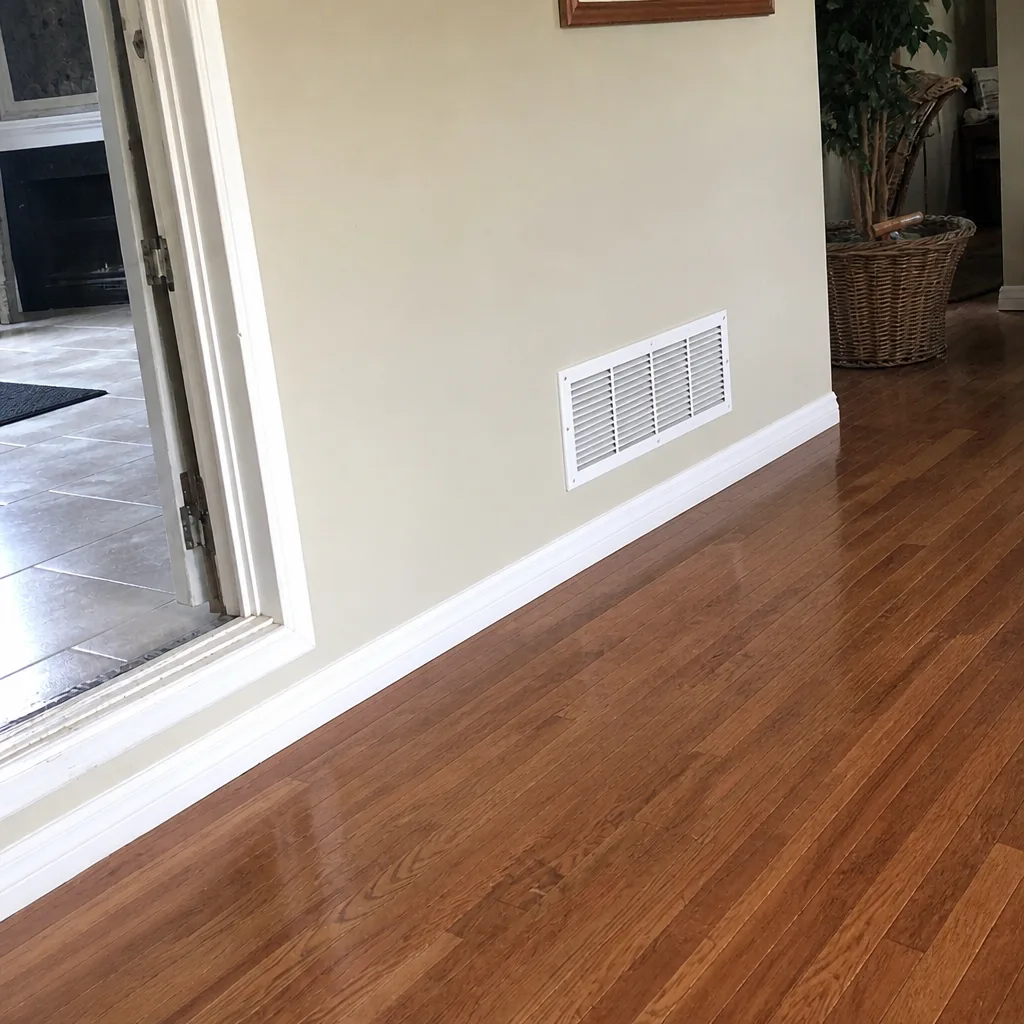
Whole-system duct and dryer vent check with before-and-after photos - you see exactly what came out of your vents
That "$99 whole-house special" is a bait ad - the real number appears once they are in your hallway, or the "clean" is a shop-vac at the register. We photograph the inside of your ducts before and after instead.
The Complete Guide to Air Duct Cleaning in Dana Point
Most homeowners who’ve had their ducts “cleaned” have no way to verify anything was actually cleaned. No before and after photos, no airflow readings, no access panel left open for inspection. That’s not cleaning; that’s a transaction. We wrote this guide because Dana Point sits in a marine-layer climate that loads duct systems differently than inland California homes, and because the difference between a real job and a quick pass with a shop vac comes down to equipment, inspection protocol, and documentation. By the end you’ll know what’s actually inside a Dana Point duct system, what proper equipment looks like, and what a completed job should prove to you before you pay. See what’s inside your ducts – and what we do about it.
Styles & brands we work with
- Whole-home duct cleaning
- Dryer vent cleaning
- Camera inspection
- Sanitizing & deodorizing
Quick Answer
Air duct cleaning in Dana Point is the mechanical removal of accumulated dust, lint, and moisture-bound particulate from the supply and return sides of your HVAC system using rotary brush and negative-pressure vacuum equipment, followed by documented verification. A legitimate job starts with a camera scope and static pressure reading, cleans both the supply and return sides separately, and ends with before and after photos plus measured airflow. What separates a real service from a cheap one isn’t the price; it’s whether the contractor can prove what came out of your system and what condition it’s in now.
Table of Contents
- What Makes Dana Point Ducts Different
- What a Legitimate Inspection Looks Like Before Any Cleaning
- The Equipment Difference: Rotary Brush and Negative Pressure vs. Shop Vacs
- Why Supply and Return Sides Need Different Cleaning Approaches
- How to Read a Post-Cleaning Verification Report
- Beyond Cleaning: Sealing, Sanitizing, and Air Quality Completion
- Dryer Vent Cleaning: The Overlooked Fire Hazard
- What Air Duct Cleaning Costs in Dana Point
- Common Mistakes to Avoid
- When to Call a Professional
- Frequently Asked Questions
- The Bottom Line
What Makes Dana Point Ducts Different
Dana Point sits on a stretch of Orange County coastline where the marine layer rolls in most mornings and burns off by midday. That daily cycle of cool, damp air followed by dry afternoon sun does specific things to a duct system. Moisture condenses on cool metal surfaces inside the supply side, and where there’s persistent moisture there’s a sticky film that captures dust, lint, and pollen instead of letting it blow through. Inland California homes in places like Temecula or Riverside see dry heat and dry dust. Dana Point homes see dust that binds to moisture, settles into duct liners, and stays put.
That combination matters because of how the system runs. A home near Dana Point Harbor can pull in humid air during morning intake cycles, and once that air cools inside the supply trunk, the moisture drops out and leaves a residue behind. Over a season, that residue becomes a base layer that fresh dust sticks to. You don’t see it, but you smell it when the system first kicks on – a musty, earthy note that fades after a few minutes but never really goes away.
- Morning marine layer: damp air drawn into the return picks up particulates before it’s conditioned.
- Supply-side condensation: cool metal and cool flex duct collect a sticky film that traps debris.
- Harbor-adjacent homes: increased ambient humidity keeps interior air moist longer through the day.
- Canyon and hillside homes: windows open overnight bring pollen and fine dust into the return path.
In our experience, Dana Point systems accumulate a different debris profile than inland homes: more bound, less loose. That’s why a shop vac approach doesn’t work well here – it loosens the top layer and leaves the bound film behind. The duct cleaning process has to break that film mechanically and extract it, not just blow it around. It’s also why duct repair and sealing matter in a Dana Point home: a compromised joint in a humid climate means moisture gets where it shouldn’t. Our technicians have up to 12 years of experience reading these local patterns.
What a Legitimate Inspection Looks Like Before Any Cleaning
A real duct cleaning job starts before a single brush enters the system. The inspection is the proof that the job is necessary, that the technician knows what they’re working with, and that the finished result can be measured against something. If a contractor shows up and immediately starts a vacuum, you’re not getting an inspection – you’re getting a head start on a sales pitch.
Here is the inspection protocol we follow in every Dana Point home and light-commercial space:
- Camera scope of the main trunk and supply runs. A small camera goes into the system through an access point so the technician can see the actual condition of the duct liner, joints, and debris load.
- Static pressure reading. This measures how hard your blower is working to push air through the system. Elevated pressure is a sign of restriction, often from debris or a failing seal.
- Filter condition and type. A clogged or mismatched filter changes airflow in ways that affect how the ducts accumulate debris. The technician notes what’s in there and why.
- Return-side access check. Many homes have no accessible return panel. The technician confirms how access will be created, usually by cutting a service opening that gets professionally sealed afterward.
- Airflow measurement at registers. A reading at each register establishes a baseline. This is the number that gets compared after cleaning.
- Walkthrough of findings with the homeowner. Before any work begins, the technician shows what the camera saw and explains what cleaning will and won’t address.
This is what “See what’s inside your ducts – and what we do about it” means in practice. You see the scope images. You see the pressure number. You agree to a flat price per system before anything gets brushed. No coupon trick, no surprise line items once the technician is on site. If a company can’t show you this inspection, they can’t prove they cleaned anything.
The Equipment Difference: Rotary Brush and Negative Pressure vs. Shop Vacs
The tools determine the result. A truck-mounted negative pressure system pulls a strong, continuous vacuum on the entire duct system while a rotary brush agitates debris off the liner walls. The two work together: the brush breaks the bond, the vacuum captures what breaks loose, and the debris leaves the house entirely rather than settling elsewhere. A shop vac and a long hose don’t do this. Neither does the “blow and go” method some low-cost operators use – literally blowing compressed air through the system and letting debris come out of the registers into the room.
We use Rotobrush and Nikro professional duct-cleaning systems, the same platforms used by commercial HVAC contractors. The reasons matter for Dana Point homes:
- Rotary brush agitation: a spinning brush head travels the length of each run and scrubs the duct liner, breaking the moisture-bound film loose.
- Continuous negative pressure: the system stays under vacuum the whole time, so loosened debris moves toward the extraction point rather than into the living space.
- HEPA filtration on extraction: fine particulate is captured, not released back into the room as exhaust.
- Containment with negative-air equipment: for larger or sensitive jobs we use Abatement Technologies negative-air units to hold dust and debris inside the work zone.
Professional-grade equipment, not DIY workarounds. It’s the difference between a brushed, extracted, verified system and a box of dust that got moved from one part of your house to another. When a company quotes you a price with no equipment description, ask what they’re using. If the answer is vague, that’s your answer.
Why Supply and Return Sides Need Different Cleaning Approaches
Your system has two sides, and they behave differently. The return side is where unfiltered air comes back from the rooms, so it carries the heaviest load of dust, lint, hair, and pet dander. The supply side is where conditioned air gets delivered, so it collects less loose debris but more of the moisture-film we described earlier. Cleaning the supply and skipping the return misses the source. Cleaning the return and skipping the supply leaves the film behind. Either half-job means the system re-contaminates quickly.
Here’s the difference in practice:
- Return side: heavy pre-filter debris, larger particulates, occasional objects drawn in from the living space. Requires aggressive rotary brush work and high-volume extraction.
- Supply side: lighter but stickier debris bound to the liner by moisture. Requires careful brush speed to break the film without damaging the liner or flex duct.
- Main trunk: the largest interior volume, often the most overlooked. Needs full-length brush access through multiple ports.
- Registers and boots: the visible end points. Each gets cleaned individually so the delivery point itself is clear.
When a contractor skips the return side, it’s usually because they don’t want to cut a return access panel and reseal it. That’s the exact shortcut that makes a cleaning “look done” and fail within a season. In Dana Point homes, where moisture-bound film returns fast, a supply-only job is a waste of money. Cleaning is step one; we also seal, repair, and sanitize, because the return panel has to go back on tight and the seams have to hold.
How to Read a Post-Cleaning Verification Report
A completed job should produce a document you can hold in your hand. Not a receipt that says “services rendered.” A verification report that shows what was found, what was done, and what changed. This is where most of the industry falls short, and it’s the single most useful thing you can ask for when comparing quotes.
Here’s what a legitimate report should include:
- Before and after photos of the interior of your ducts. Same camera, same angles. You should be able to see the difference yourself.
- Before and after static pressure readings. If the numbers don’t change, the restriction wasn’t addressed.
- Before and after airflow measurements at the registers. A measured improvement in airflow at each register tells you the system is delivering more air than it was.
- A listing of access points created and how they were sealed. Every opening a technician cuts should be documented, sealed, and photographable.
- Filter condition notes. What was in the system before, what was installed (if any), and why.
- A summary of any duct repair or sealing performed. If a joint was failing or a flex run was torn, the repair should be listed.
We leave our access panels open for your inspection until you’ve seen them, and we produce this report for every job. Not because it’s required, but because a documented clean is the only kind of clean that means anything. Your system works harder when your ducts are compromised – here’s how we fix that. The report is how you confirm the fix actually happened in your Dana Point home.
Beyond Cleaning: Sealing, Sanitizing, and Air Quality Completion
Cleaning removes what’s built up. It doesn’t repair what’s failed and it doesn’t stop the next batch from arriving. A lot of duct systems in Dana Point are leaking at the joints – not enough to be obvious, but enough to pull unfiltered attic or crawlspace air into the conditioned airstream. That’s a duct problem, not a cleaning problem, and cleaning alone won’t fix it.
Our service menu covers the full duct system, so you don’t have to call multiple vendors:
- Duct repair and sealing: closing failing joints, sealing service panels, and repairing damaged flex runs. This is where energy loss and contamination both get stopped at the source.
- Guardsman-grade sanitizing: commercial-level antimicrobial treatment applied after cleaning for post-cleaning microbial protection. Available for residential and light-commercial systems.
- Whole-home filtration: we carry and install Honeywell and Aprilaire IAQ products, trusted names in whole-home air filtration and humidity control. A proper filter cabinet at the air handler changes what the duct system sees day to day.
- Negative-air containment: Abatement Technologies units for containment and air scrubbing during sensitive jobs, especially in occupied homes or commercial spaces.
If you’re choosing between a duct-only vendor and one that can also repair, seal, filter, and sanitize, that choice usually determines how long the clean actually holds. Cleaning a leaking duct system is cleaning a system that will re-contaminate. Repairing and sealing it means the clean stays clean. Air quality work is the completion step, not the upsell.
Dryer Vent Cleaning: The Overlooked Fire Hazard
Dryer vent cleaning is a separate system from your HVAC ducts, but it belongs in this guide because it’s a fire risk most duct-only cleaners don’t touch. Lint accumulates inside the dryer vent run with every load, and the National Fire Protection Association identifies lint buildup as a contributor to thousands of residential fires each year. The vent is the one duct in your home where the debris is flammable.
Signs a dryer vent needs attention:
- Clothes take longer than they used to in a full cycle.
- The dryer gets noticeably hot to the touch on the exterior.
- A burning or hot-lint smell during drying.
- Lint visible around the vent flap or behind the dryer.
- Any vent run that hasn’t been cleaned in a year or more.
Dana Point homes often have long dryer vent runs through garages or along exterior walls, which gives lint more surface to cling to and more opportunity to block. A proper dryer vent cleaning clears the full run with brushing and vacuum extraction and verifies airflow at the exterior termination point. If you’re already booking air duct cleaning for the HVAC system, handling the dryer vent at the same time makes sense. Same visit, two systems addressed.
What Air Duct Cleaning Costs in Dana Point
Air duct cleaning in Dana Point is priced per system, not per vent, and a flat price is agreed before work starts. That’s what we do, and it’s what you should ask for from any contractor. Per-vent pricing is how the coupon bait-and-switch works: a low teaser number pulls the phone call, then line items get added once the technician is inside. A whole-system flat price is the only honest way to quote.
Typical estimated ranges in the Dana Point market:
| Service | Typical estimated range | What it covers |
|---|---|---|
| Standard residential duct cleaning | Roughly $300 to $600 | Supply and return sides, main trunk, registers, before and after photos |
| Larger or two-system home duct cleaning | Roughly $500 to $900 | Two air handlers, additional runs, extended trunk cleaning |
| Duct repair and sealing | Quoted per job by written estimate | Joint repair, panel sealing, flex run replacement |
| Guardsman-grade sanitizing | Quoted per job by written estimate | Post-cleaning antimicrobial treatment |
| Dryer vent cleaning | Roughly $120 to $250 | Full run brushing, extraction, exterior airflow verification |
Every number above is an estimate. The written estimate for your specific home sets the final price, and there are no add-ons after the technician arrives. The local pro is licensed and insured as their state requires, and estimates are free. If you want an exact figure for your Dana Point home, call (855) 629-3179. We answer 24/7. Fast dispatch from 7am to 7pm, Sunday through Friday.
Common Mistakes to Avoid
- Booking on a per-vent coupon. It’s designed to get a technician to your door with a number that grows once they’re inside. Insist on a flat per-system price agreed before work starts.
- Letting a contractor clean only the supply side. In Dana Point’s marine-layer climate, return-side debris is where most of the accumulated load lives. A supply-only job leaves the source untouched.
- Accepting “it’s clean, trust us” with no photos. Before and after photographs of the interior of your ducts are the bare minimum proof. If a company doesn’t provide them, you have no way to know anything was done.
- Skipping the inspection. No camera scope and no static pressure reading means no baseline to measure the job against. A technician starting the brush on arrival is skipping the most important part.
- Cleaning a leaking system without addressing the leaks. Duct seams that have failed will re-pull dust within a season. Repair and sealing should be part of the same visit if the inspection finds them.
- Forgetting the dryer vent. It’s a separate system from the HVAC ducts but it’s the one with a lint-buildup fire risk. Many duct-only cleaners don’t offer it, which means it never gets done.
- Believing “blow and go” counts. Compressed air through the system pushes debris out into your rooms rather than extracting it. If the contractor’s equipment is a hose and a shop vac, it’s not a clean.
When to Call a Professional
You should call a professional when you notice symptoms that point to the duct system itself: musty or dusty odors at the first minute the system runs, visible dust plumes from a register, allergy-type symptoms that get worse when the HVAC is on, or a spike in energy bills with no other obvious cause. In Dana Point, the marine layer tends to amplify these signs – the moisture-bound film makes them show up faster than in dry inland homes. You should also call if it’s been more than a year or two since the last cleaning, if you’ve recently renovated and drywall dust entered the return, or if your dryer is taking longer than it used to and you haven’t had the vent serviced.
Dana Point Air Duct Cleaning Pros offers free estimates in Dana Point – call (855) 629-3179. We answer 24/7. Fast dispatch from 7am to 7pm, Sunday through Friday. If you call outside those dispatch hours, your booking goes into the next opening, Sunday through Friday, 7am to 7pm. You’ll get a camera scope, a static pressure reading, and a flat price per system before any work begins.
Frequently Asked Questions
Typical estimates in the Dana Point market run roughly $300 to $600 for a standard residential system, and roughly $500 to $900 for larger or two-system homes. Those are whole-system prices, not per-vent teasers, and the written estimate sets the final figure. Call (855) 629-3179 for an exact quote – estimates are free.
Cheap quotes are usually per-vent teaser pricing that grows once a technician is on site, or they reflect a shop-vac and hose instead of rotary brush and negative-pressure equipment. A low number also often means only the supply side gets touched and the return side is skipped. Ask for a flat per-system price and a description of the equipment before you book. For an honest estimate in Dana Point, call (855) 629-3179.
You should receive before and after photographs of your duct interiors, before and after static pressure readings, and airflow measurements at your registers. A legitimate contractor will leave access panels open for your inspection until you’ve seen the work. Without documentation, you have no way to verify anything was cleaned, regardless of what the technician tells you. Call (855) 629-3179 to schedule a job that produces that documentation.
For most Dana Point homes, every two to three years is reasonable, and sooner if signs show up first: musty odors, dust plumes from registers, or worsening allergy symptoms when the HVAC runs. The marine layer here can bind debris to duct liners faster than in dry inland climates, so pay attention to those signs rather than relying on a fixed calendar. Call (855) 629-3179 to talk through your specific system.
Both sides need cleaning. The return side carries the heaviest load of dust, lint, and pet dander from your rooms, and the supply side holds the moisture-bound film that traps it. Cleaning only one side is the most common shortcut in the trade. A proper job covers supply, return, main trunk, and every register. Call (855) 629-3179 for a full-system estimate.
Cleaning is the base step, and sanitizing is the completion step when the inspection finds microbial growth or persistent odor after cleaning. We offer Guardsman-grade sanitizing for residential and light-commercial systems, applied after cleaning for post-cleaning microbial protection. Whether you need it depends on what the camera scope shows during inspection. Call (855) 629-3179 to schedule an inspection and find out.
Yes. Our service menu covers cleaning, repair, sealing, sanitizing, and HVAC cleaning as one process, which means you don’t need multiple vendors. Sealing failed joints and repairing damaged flex runs during the same visit prevents the system from re-contaminating within a season. Call (855) 629-3179 to book a combined job.
The Bottom Line
A duct cleaning job in Dana Point should leave you with more than a receipt. It should leave you with camera-scoped before and after photos, static pressure readings, airflow measurements, sealed access panels, and a system you can inspect yourself. The marine-layer climate here loads duct liners differently than inland California homes, and that means equipment and process matter more than a coupon price. Rotary brush and negative-pressure extraction, a documented inspection, both sides of the system cleaned, and repair or sealing where the inspection finds it – that’s what an actual clean looks like. Anything less is a transaction. Professional-grade equipment, not DIY workarounds. And a report that proves the work happened.
Ready to see what’s inside your ducts? Call (855) 629-3179 for a free estimate. We answer 24/7. Fast dispatch from 7am to 7pm, Sunday through Friday. We’ll scope the system, read the pressure, show you what we found, and give you a flat price per system before anything else happens. You’ll get same-visit coverage for Dana Point Air Duct Cleaning Pros full-system service, from cleaning through sealing, sanitizing, and dryer vent work, and you’ll walk away with documentation you can hold.
Written by the team at Dana Point Air Duct Cleaning Pros.
See the difference
 Before
 After
 Before
 After
 Before
 After