
Last updated November 24, 2026
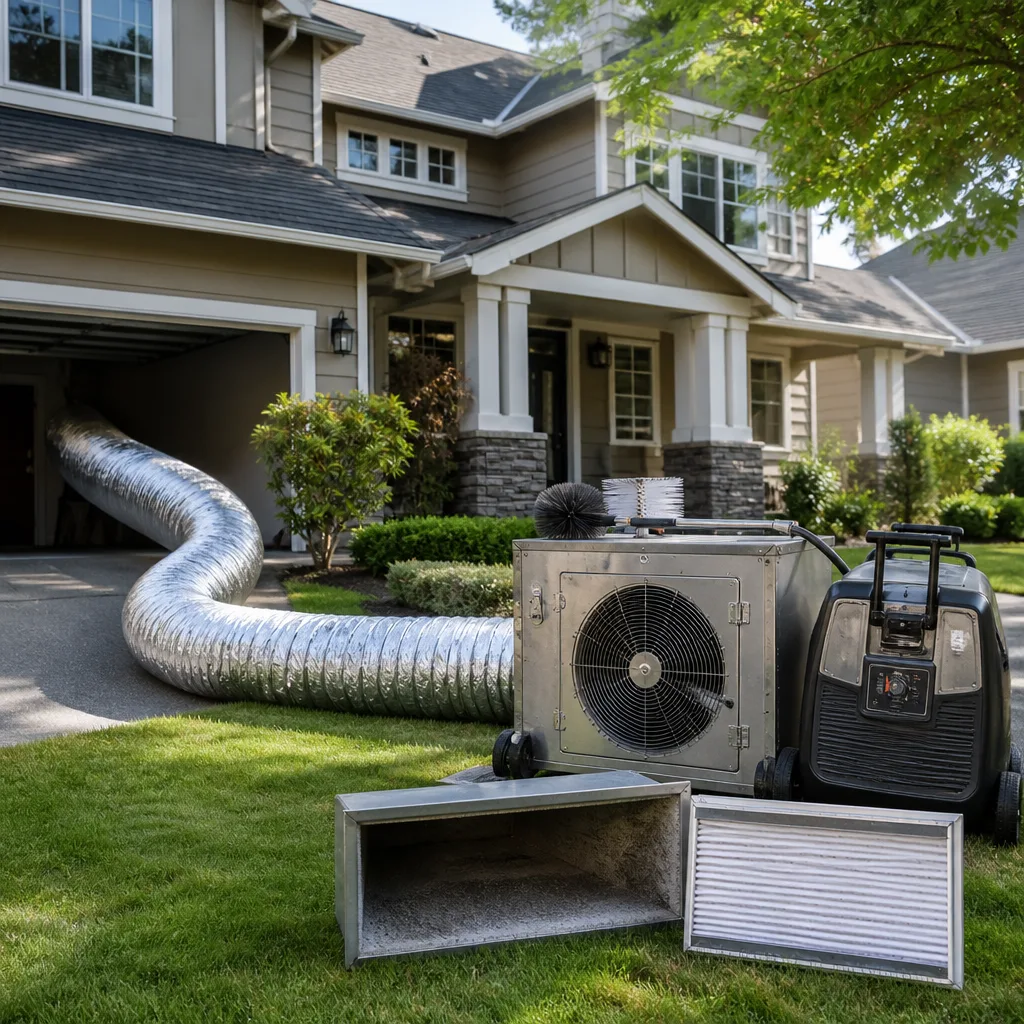 Whole-home duct cleaning
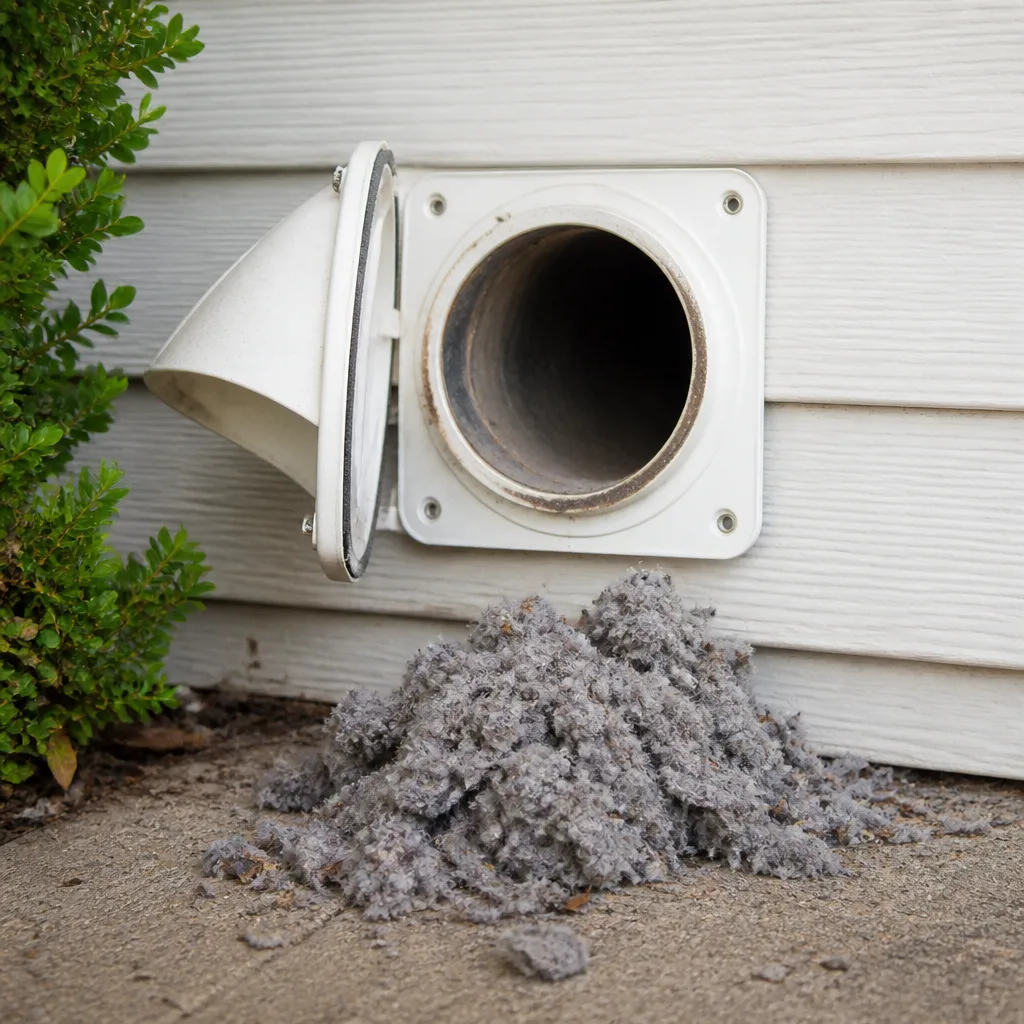 Dryer vent cleaning
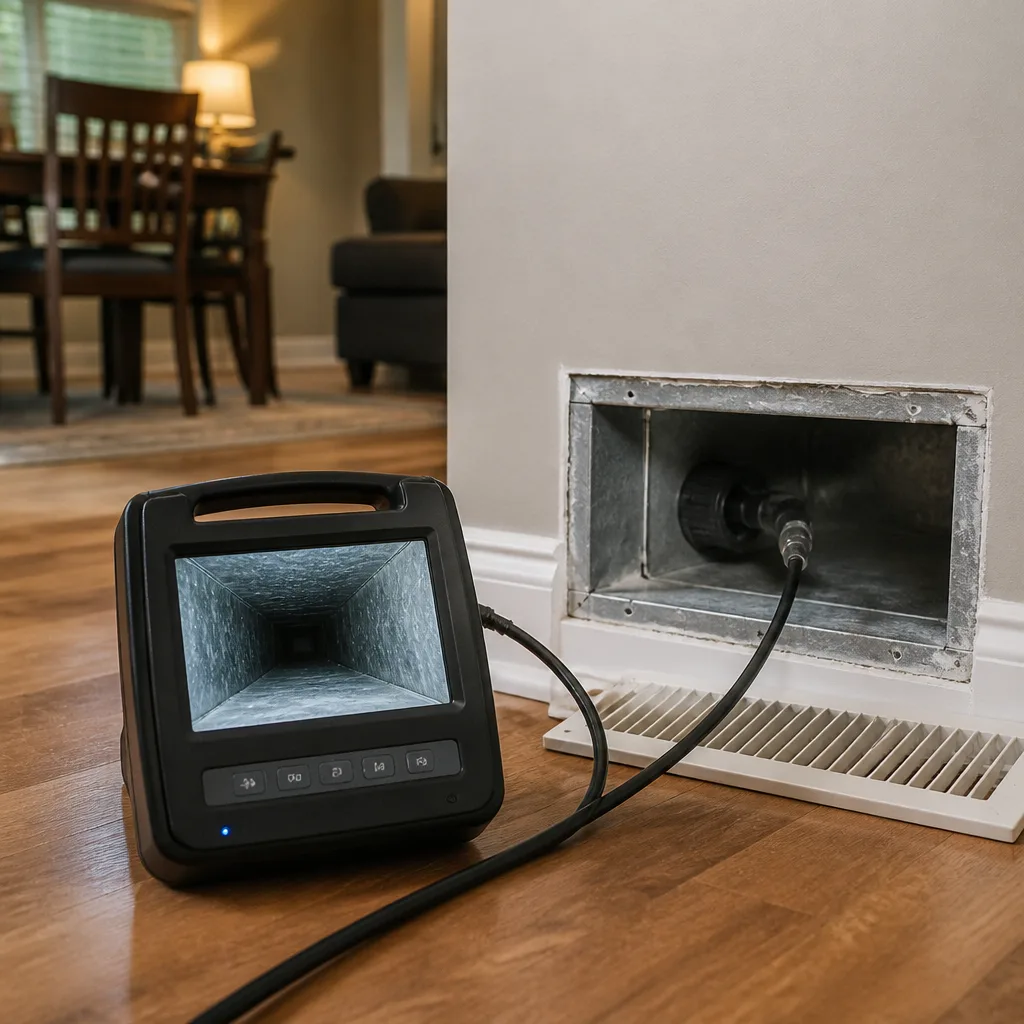 Camera inspection
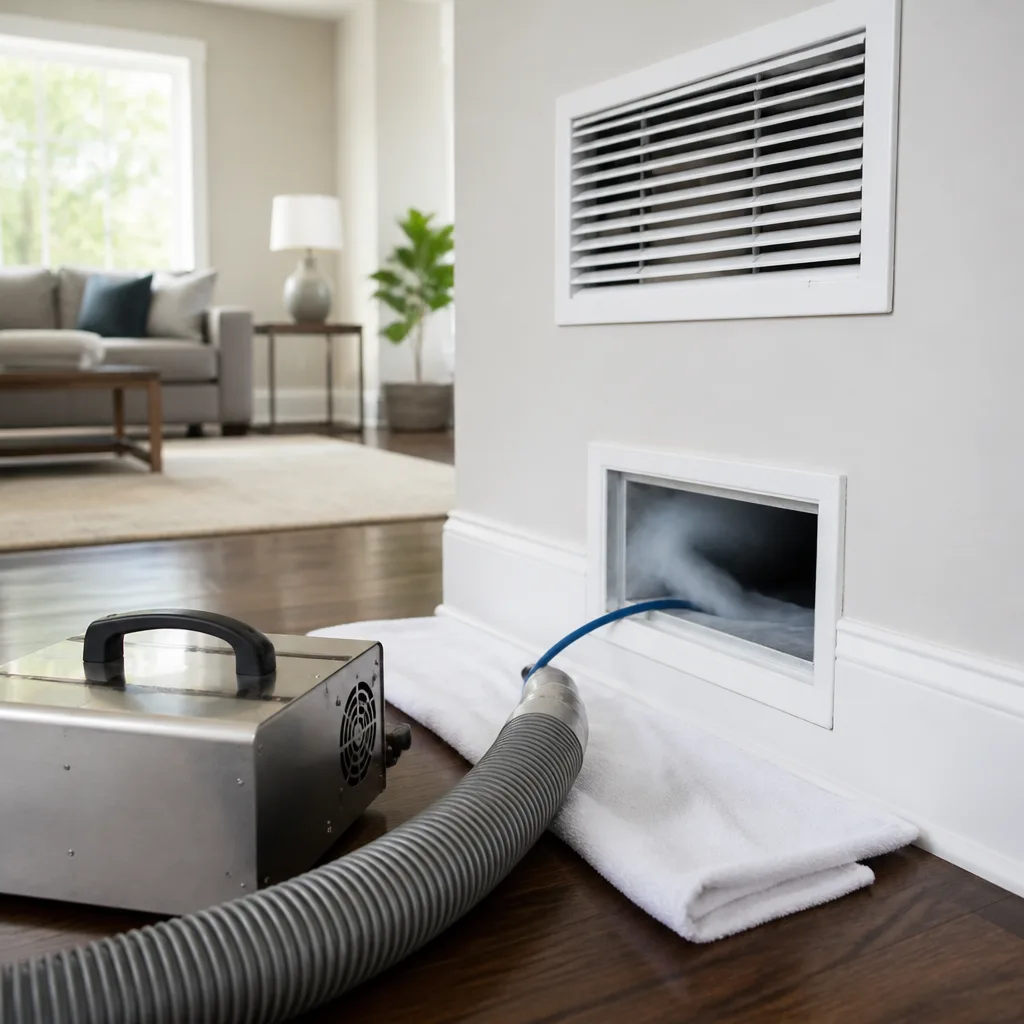 Sanitizing & deodorizing
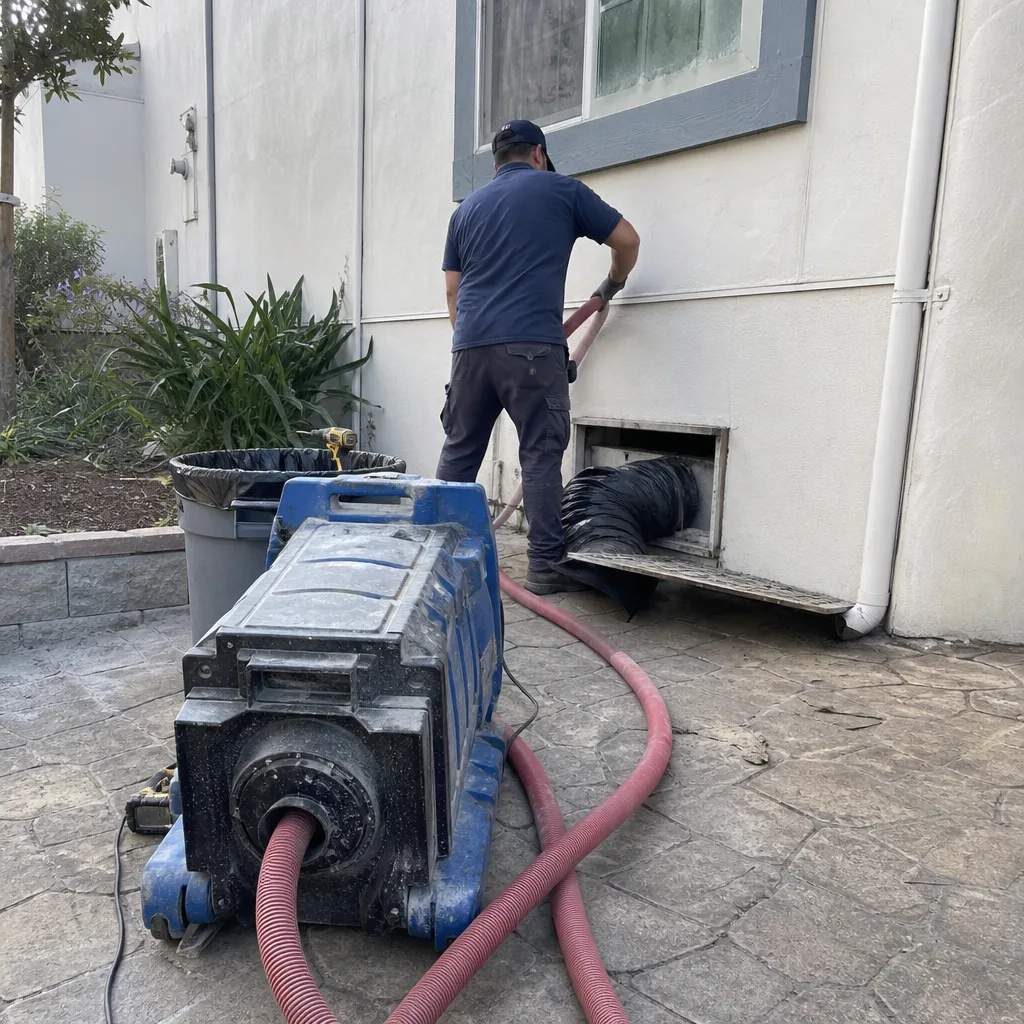
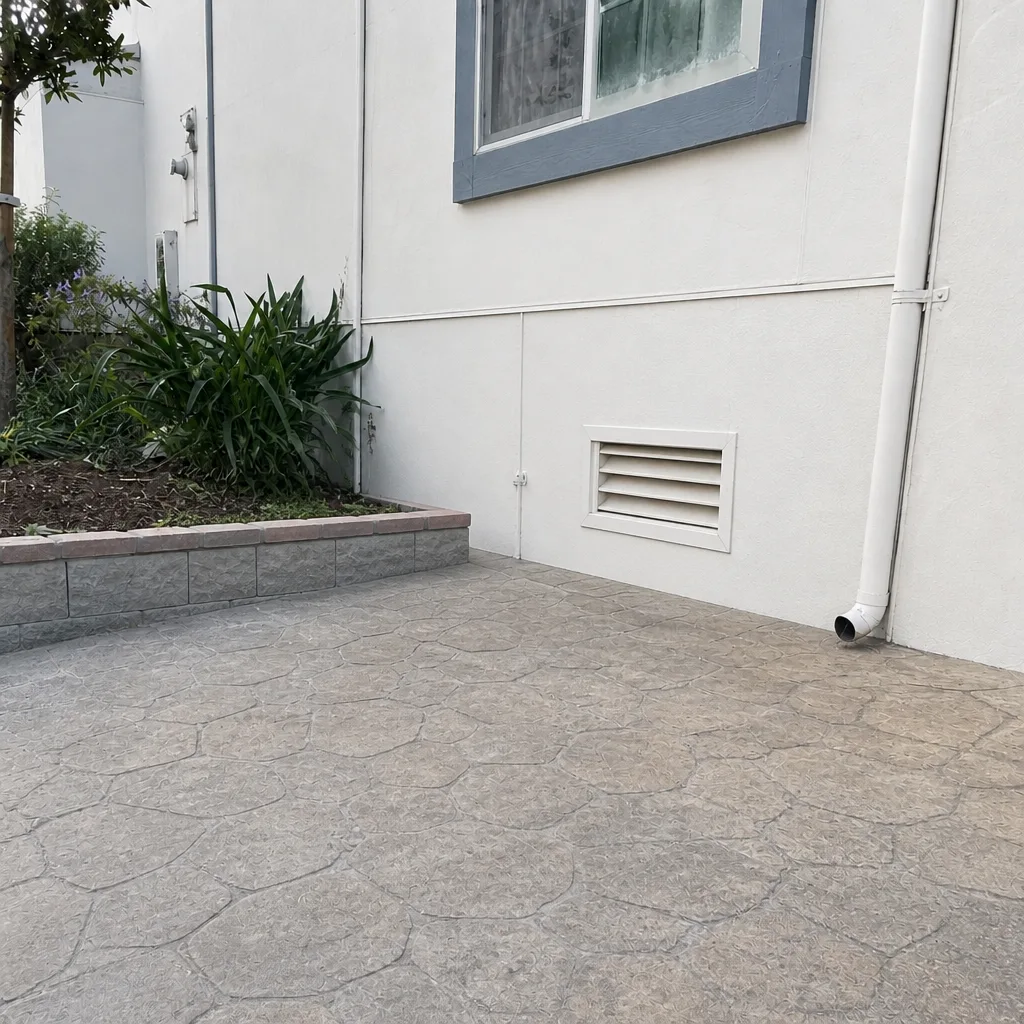
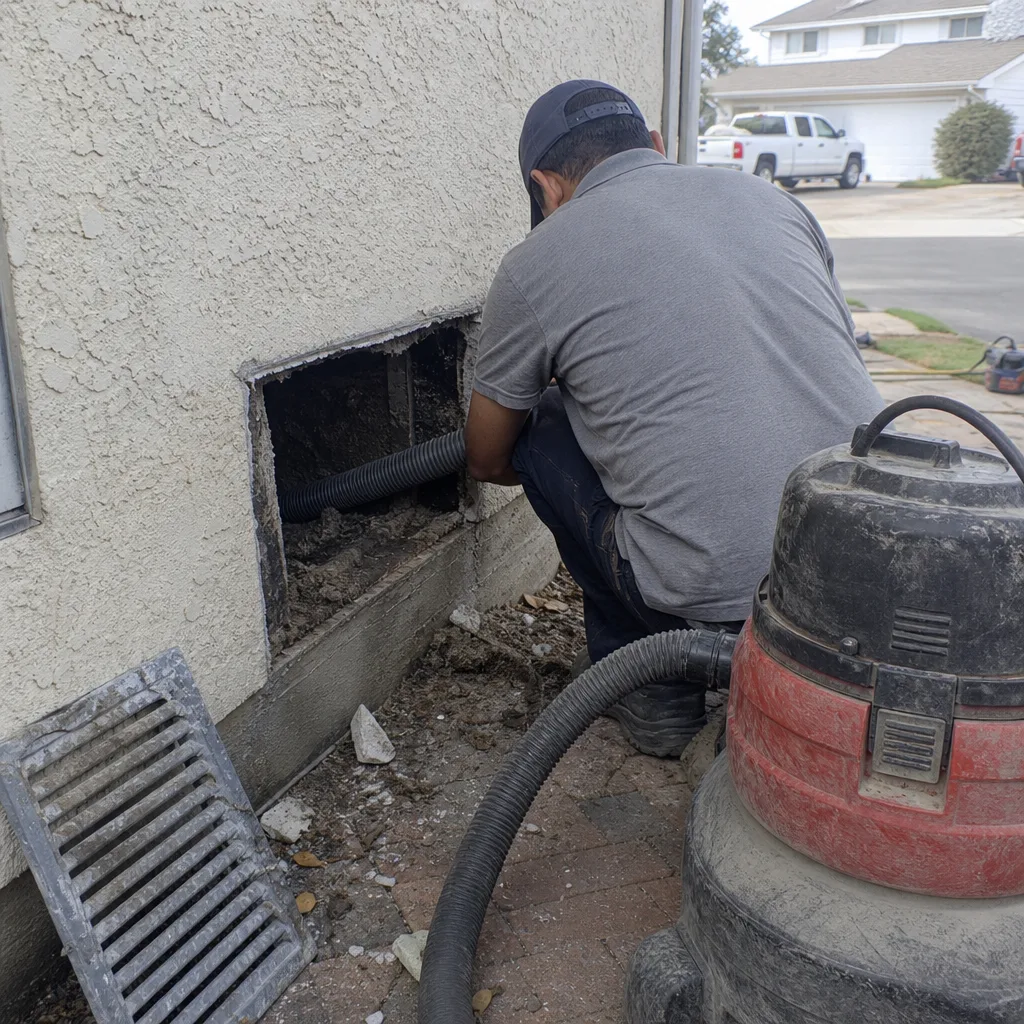
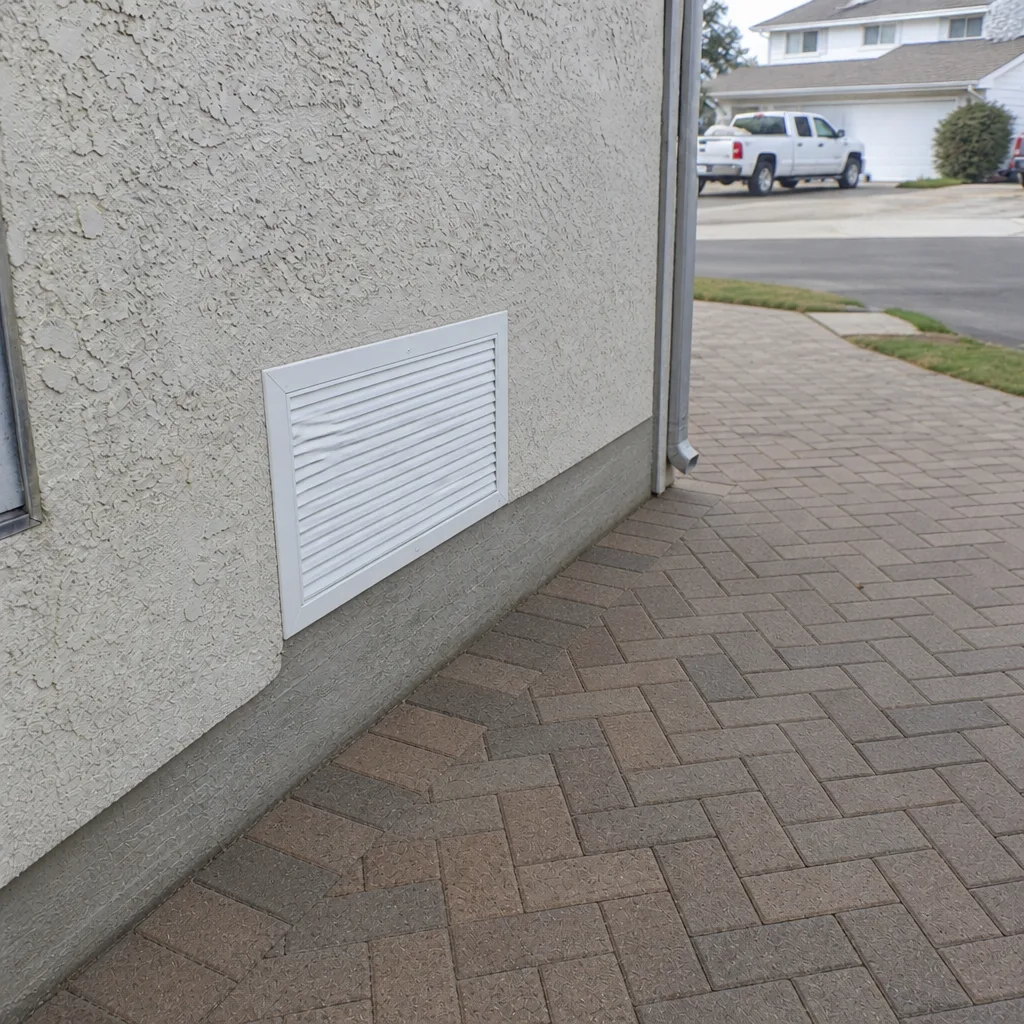
Whole-system duct and dryer vent check with before-and-after photos - you see exactly what came out of your vents
That "$99 whole-house special" is a bait ad - the real number appears once they are in your hallway, or the "clean" is a shop-vac at the register. We photograph the inside of your ducts before and after instead.
DIY vs Professional Air Duct Cleaning: The Dana Point Homeowner’s Decision Guide
Here’s the part most DIY guides get wrong: the problem isn’t whether you can reach the inside of a duct. It’s whether your tools can actually pull debris out once you’ve loosened it. A homeowner with a shop vac and a vent brush can clean the first six inches of a supply register – roughly 4% of the duct system. The other 96% runs through walls, ceilings, and a trunk line you can’t see from any register, and getting debris out of it requires sustained negative pressure, a sealed system, and a rotary agitation tool at the end of a long hose. Consumer products don’t create those conditions.
This guide explains the mechanical reason DIY duct cleaning falls short in most Dana Point homes, what shop vacs and brush kits actually accomplish, and the narrow situations where doing it yourself is the right call.
Quick Answer
For most Dana Point homes, professional air duct cleaning is the right choice because consumer vacuums can’t generate the negative pressure or sealed containment required to extract debris from the full duct system – they agitate dirt without removing it. DIY is genuinely appropriate for narrow tasks: cleaning a single dryer vent run, wiping a register grille, or swapping a filter housing. If you can see heavy buildup, smell mustiness, or notice symptoms that track with HVAC running, that’s a professional job.
Styles & brands we work with
- Whole-home duct cleaning
- Dryer vent cleaning
- Camera inspection
- Sanitizing & deodorizing
Table of Contents
- How negative air pressure actually extracts debris
- What consumer brush kits and shop vacs realistically accomplish
- The three cases where DIY is genuinely appropriate
- Why Dana Point’s climate raises the stakes on DIY
- How to inspect your own ducts before you decide
- What a professional air duct cleaning actually involves
- Beyond cleaning: repair and sealing
- Cost, equipment, and what you’re really buying
- Common mistakes to avoid
- When to call a professional
How Negative Air Pressure Actually Extracts Debris
Professional duct cleaning works on a simple principle: put the entire duct system under negative pressure, then agitate the debris so the airflow carries it out. The vacuum isn’t sucking at the register – it’s connected to the trunk line or plenum through a large hose, and the system is temporarily sealed so air can only enter through the openings the technicians control. When a rotary brush spins inside a branch, loosened dust has one place to go: toward the vacuum.
This is the mechanism that separates extraction from agitation, and it’s what commercial HVAC contractors rely on when they clean systems in restaurants, offices, and hotels. Rotobrush and Nikro are two of the platforms built for this. Both use a high-volume vacuum combined with a rotating brush or air whip on a flexible shaft that feeds through the ductwork, so the tool reaches deep into runs that a register-mounted brush can’t touch.
The conditions required for this to work:
- A sealed system. Registers are covered, and the vacuum is connected at a single point so the pressure differential is real.
- High-cubic-feet-per-minute vacuum. Consumer shop vacs move a fraction of the air volume professional units do, and volume is what carries debris.
- Rotary agitation. A brush or whip that scuffs debris off the duct wall so the airflow can lift it, rather than air blowing past it.
- Containment. The hose captures the debris, and HEPA filtration or negative-air equipment keeps fine particles out of your living space during the job.
In our experience, most homeowners who try DIY aren’t failing because they lack effort. They’re failing because they can’t create negative pressure across an entire system with a tool designed to pick up sawdust in a garage.
What Consumer Brush Kits and Shop Vacs Realistically Accomplish
Let’s give the consumer gear its due. A dryer vent brush and a shop vac can do real work – just not on the duct system. If you want to see the honest limits, walk through what these tools can and can’t reach.
What actually works
- Cleaning a single dryer vent run. If your dryer duct is a short, straight, accessible run, a vent brush attached to a drill can clear lint buildup, and a shop vac can pull out what’s loosened. This is a legitimate DIY task, and it’s also the one most likely to matter for fire safety.
- Wiping a register grille. The visible face of a supply or return register collects dust, and removing it, washing it, and drying it before reinstalling is straightforward and worth doing.
- Replacing a filter housing gasket or a filter. If your return filter housing has a worn seal, replacing it is a maintenance task a confident homeowner can handle – and it matters for air quality more than most people realize.
- Vacuuming the floor of a return plenum you can reach. Light surface dust on an accessible plenum floor can be cleaned with a shop vac, though you should shut off the system first.
What marketing claims get wrong
Consumer brush kits are sold with the promise of reaching “the entire duct.” In practice, the flexible brush shaft binds in elbows, can’t navigate the turns in a rigid trunk, and leaves more debris behind than it removes because there’s no airflow pulling it out. Some kits come with a shop-vac adapter that connects to a register – which does create a small pressure differential, but only across the branch closest to the vacuum. The rest of the system stays untouched. You’ll see a satisfying amount of dust in the canister and assume the ducts are clean. Usually, you’ve cleaned one branch and scattered the rest.
Blow-and-go methods – where someone blows compressed air through a register to “loosen” debris – are worse than doing nothing in a sealed house, because the debris has to land somewhere, and that somewhere is your living room.
The Three Cases Where DIY Is Genuinely Appropriate
We’re not going to tell you DIY is always wrong. It isn’t. There are specific jobs where a homeowner with basic tools and a weekend can do the work well, and hiring a pro would be overkill.
1. A single, short dryer vent run
Dryer vents are the clearest case for DIY because the run is finite, most are accessible from outside, and lint buildup is the fire hazard the NFPA consistently flags. A dryer vent brush kit cleans the run. Vacuum the exterior hood and check the flap opens freely. If your run is long, has multiple elbows, or runs up through a wall or roof, professional dryer vent cleaning is worth the call because the brush can get stuck, and the job turns into a wall-opening project.
2. Cleaning a register grille
Pop the grille off, wash it in the sink or hose it outside, dry it completely, and reinstall it. This is the cleanest DIY win available, and it takes ten minutes per register. It also gives you a reason to look into the duct opening on the other side, which is the useful part.
3. Replacing a filter housing
If the filter slot in a return housing is loose, or the housing itself is cracked or missing a gasket, replacing it stops unfiltered air from bypassing the filter. That’s an air quality fix you can do without touching the duct interior. If your system uses a specific filter size, match it exactly and check the housing fits snugly.
What these three tasks have in common: none require creating negative pressure in the full system, and none depend on extraction from duct interior. Anything that does require those conditions is a professional job.
Why Dana Point’s Climate Raises the Stakes on DIY
Dana Point homes sit in a mild, humid coastal climate. Daytime highs in the 70s and 80s, ocean air moving through, and indoor humidity that climbs when the marine layer settles in. That combination creates a specific problem for DIY duct work that doesn’t show up in dry inland markets: disturbing a duct system without extracting debris can introduce moisture into the very layer that was previously dry.
Here’s the mechanism. Flex duct – which is common in Dana Point homes built in the last several decades – has an internal liner, insulation, and an outer jacket. When you push a brush through it and don’t extract the loosened material, the debris settles against the liner and can hold moisture. Add warm, humid air moving across it during the cooling season, and you create a surface where mold can establish. In Phoenix or Las Vegas, the same mistake tends to dry out. Here, it doesn’t.
The moisture problem compounds when ducts are disturbed in the attic. Dana Point attics are typically vented, but the humidity outside still reaches 70% and up on many summer days. A duct that’s been brushed but not sealed against the attic air may pull that moisture into the liner.
What this means for the DIY decision:
- If your ducts are flexible and you don’t have extraction equipment, don’t brush aggressively. You’re more likely to make the interior a moisture trap than to clean it.
- Any musty smell following a DIY attempt is a signal to stop and get the system inspected, because mold in duct liner doesn’t clean off with a brush.
- Professional Dana Point Air Duct Cleaning Pros service includes extraction and, where needed, Guardsman-grade sanitizing to address post-cleaning microbial growth – neither of which a homeowner can replicate with consumer tools.
If you notice a musty smell after a DIY attempt, the fix is usually duct cleaning with a proper extraction system, and sometimes duct repair to fix a compromised liner. That’s the point where the cost of DIY exceeds the cost of a professional call.
How to Inspect Your Own Ducts Before You Decide
Before spending money on either option, do a real inspection. Not a glance at the registers – a structured look that tells you what’s actually going on. Here’s the sequence we recommend to Dana Point homeowners trying to decide:
- Shut off the HVAC system. Give the fan a few minutes to stop completely. You don’t want a running system pulling debris into the air while you work.
- Remove a supply register and look inside with a flashlight. Aim for a register at the far end of the house from the air handler. If the duct interior is heavily coated – dark residue, visible dust mat, or material that flakes – you have real buildup. A light dust film is normal.
- Remove a return register and look at the plenum and filter housing. The return side is where buildup usually shows first because all the air in your house passes through it. Check that the filter fits the housing snugly and isn’t bypassing on the sides.
- Look at the supply registers around the house. Dark streaks around the register face usually mean air is escaping past the register itself, pulling attic or wall dust along with it. That’s a sealing issue, not a debris issue, and it changes the fix.
- Smell the air when the system first starts. A musty or dusty smell at start-up is the strongest signal that something is growing or accumulating inside the system. Let the system run for a minute and stand in the room where a return register is; the smell concentrates there.
- Check your filter after two weeks. If a fresh filter turns dark grey or matte within two weeks, there’s more airborne debris in the system than a filter can manage. That’s a sign of a system-level problem.
- Look for visible flex duct in the attic or crawlspace. If you can see the duct runs, look for kinked sections, sagging without support, torn outer jackets, or sections separated at joints. Each of those is a case for duct repair, not just cleaning.
- Note where you feel air moving when the system runs. Rooms that feel weak on airflow can indicate a leak or a partially disconnected duct. Cleaning won’t fix that; HVAC cleaning and duct repair together will.
If this inspection gives you nothing alarming, wait. If it gives you buildup, smell, or airflow problems, the next call is to a professional – not to a brush kit.
What a Professional Air Duct Cleaning Actually Involves
A real duct cleaning job is a process, not a sweep. Here’s what a proper service looks like using the equipment we work with, and why each step matters.
- System inspection and scope. A technician maps the system: how many runs, where the trunk and plenum are, whether the ducts are rigid, flex, or a mix, and any signs of damage. What’s found in the inspection sets the job’s price and scope, which is why a written estimate precedes the work.
- Containment setup. Before any cleaning starts, registers are sealed and a large HEPA vacuum or Abatement Technologies negative-air unit is connected. Negative air creates the pressure differential that pulls debris toward the collection point rather than into rooms.
- Rotary brush extraction. Using a Rotobrush or Nikro system, a technician feeds a rotating brush through each branch, scuffing the duct wall and letting the airflow carry loosened material into the vacuum. A camera inspection is often used to verify what’s been cleaned and what the duct interior looks like afterward.
- Register and grille cleaning. Grilles are removed, cleaned outside the home, and reinstalled. This step is where the visible difference is most obvious.
- Sanitizing. Where microbial growth or odor is present, Guardsman-grade sanitizing treatments are applied post-cleaning. This is the level of antimicrobial treatment used in commercial buildings, adapted for homes.
- Filter replacement and housing check. A fresh filter goes back in, and any loose housing or worn gasket is noted. Where filtration is inadequate, a Honeywell or Aprilaire whole-home filter may be recommended as a lasting fix rather than a cleaning-only answer.
- Documentation. Photos of the ducts before and after, and a summary of what was cleaned and what the technician found. This is the verifiable record you want from any service – if it doesn’t exist, the work probably wasn’t done.
Our technicians have up to 12 years of experience with this equipment. The job is repeatable and diagnosable, which is the point: you can see what came out and what’s still there.
Beyond Cleaning: Repair and Sealing
Cleaning is step one, and a lot of duct cleaning companies stop there. The problem with stopping there is that most Dana Point homes with visible duct problems have a structural issue too – a compromised seal, a disconnected joint, or a collapsed flex liner. Cleaning a system with a leak is a short-term fix, because the leak pulls in attic or wall air and puts the same debris right back into the ducts.
Common findings that turn a cleaning into a repair job:
- Separated or slipped flex joints. The inner liner pulls free from the collar, and air bypasses through the surrounding attic or wall cavity.
- Torn outer jackets on flex duct. Dust enters the duct through the tear, and the system runs less efficiently because conditioned air leaks into the attic.
- Crushed or kinked sections. Flex duct that was run without enough support sags and restricts airflow, concentrating dust at the low point.
- Loose or unsealed plenum connections. Where the trunk meets the air handler, gaps let unfiltered return air in from the closet or crawlspace.
- Missing register boots. Air from the duct spills into a wall cavity, and the wall cavity leaks it back out around the register face.
Duct repair and sealing address these at the source. That’s the difference between cleaning up the dust and stopping the thing that keeps producing it. A complete service menu covers the whole system – cleaning, air duct cleaning, repair, sealing, sanitizing, and dryer vent service – so you’re not calling multiple vendors to close a single problem.
If your system has a compromised seal, the fix is usually straightforward once it’s found. The inspection step is what tells you which repairs are needed, and the written estimate covers them before work starts.
Cost, Equipment, and What You’re Really Buying
DIY duct cleaning has a real cost: the shop vac you already own, a brush kit that runs somewhere between $30 and $180, and a Saturday you’ll never get back. Professional duct cleaning costs more, but the comparison isn’t apples to apples because the tools aren’t equivalent. A consumer kit agitates; a professional system extracts.
What the professional side buys:
- Rotobrush or Nikro extraction system. The same category of equipment commercial HVAC contractors use. High-CFM vacuum and a rotary brush specifically designed for duct interiors.
- Negative-air containment. Abatement Technologies units keep fine debris out of your living space during the job.
- Camera inspection. Documented before-and-after photos of your own ducts.
- Sanitizing. Guardsman-grade treatment where microbial growth or odor is present.
- Repair and sealing. Fixing what cleaning can’t and stopping the source of the debris.
- Filtration and air quality. Where needed, Honeywell or Aprilaire products installed as a lasting air quality fix.
What a homeowner can expect pricing-wise: duct cleaning is priced per system by a written estimate, and the final price depends on the number of runs, condition of the ducts, and whether repair or sealing is added. Call (855) 629-3179 for a free estimate in Dana Point. The estimate sets the price before work starts, so the coupon-to-invoice problem you hear about doesn’t apply here.
The honest framing: if your ducts are lightly dusty and have no structural problems, DIY cleaning of grilles and a filter swap is enough. If they have real buildup, smell, or leaks, the professional system pays for itself by actually removing the problem rather than redistributing it.
Common Mistakes to Avoid
- Believing a shop vac can clean the whole system. It can’t create the pressure differential needed to extract debris from the trunk and branch lines. In Dana Point’s humid air, loosened but unextracted debris can become a moisture trap in flex duct and a mold risk.
- Using a blow-and-go method from a register. Compressed air doesn’t extract debris; it gusts it into your rooms. This is worse than doing nothing, and it’s the reason you sometimes hear of duct cleaning making allergies worse.
- Brushing aggressive on flex duct without extraction. The brush abrades the inner liner, and a damaged liner is a permanent problem. If your ducts are flex and you don’t have extraction equipment, don’t run a brush through them.
- Cleaning ducts without checking the return-side filter housing. A loose or bypassing housing lets unfiltered air into the system. Cleaning the ducts without fixing the housing puts the cleaned system back into the same situation.
- Skipping the dryer vent. NFPA consistently flags lint buildup as a residential fire hazard, and dryer vents are the most common place for it. If you’re doing a DIY air quality pass, at least check the dryer vent – but if it’s a long or roof-vented run, call a professional.
- Hiring on coupon price alone. The lowest coupon is often the bait. A coupon that’s followed by a large invoice once the technician is on site is a bait-and-switch pattern, and it’s the most common complaint about this industry. Ask for a written estimate per system before anyone touches a duct.
- Forgetting the documentation. If a company can’t show before-and-after photos of your own ducts, you have no way to know what happened. Insist on documentation, not a verbal “all clean.”
When to Call a Professional
Call a professional duct cleaner if any of the following applies to your Dana Point home:
- You’ve had heavy respiratory or allergy symptoms that seem to track with HVAC running.
- There’s a musty or dusty smell at system start-up that doesn’t clear after ten minutes.
- You can see dark buildup, matted debris, or flakes inside a supply or return register.
- A fresh filter turns dark grey within two weeks.
- Some rooms feel weak on airflow while others feel strong.
- You can see separated joints, torn flex jackets, or sagging ducts in the attic.
- You’re in a home you’ve just purchased and don’t know the duct history.
- Your dryer vent is long, roof-vented, or has multiple elbows.
For the professional cases, Dana Point Air Duct Cleaning Pros offers free estimates in Dana Point. When you call, the technician quotes the job per system, sets it in writing, and does the work with the extraction system and documentation to verify it. Call (855) 629-3179. We answer 24/7. Fast dispatch from 7am to 7pm, Sunday through Friday.
Frequently Asked Questions
It’s priced per system, not per vent, and the written estimate sets the final price. Factors include the number of duct runs, condition, and whether repair, sealing, or sanitizing is added. The coupon-teaser price you see online is not the full cost of a proper job. Call (855) 629-3179 for a free estimate – the estimate is set before any work starts.
Cheap quotes usually mean the work is done with consumer-grade tools or a blow-and-go method: no negative pressure, no rotary extraction, no documentation. Those jobs can redistribute dust rather than remove it. A proper job uses a Rotobrush or Nikro system with containment, and you should see before-and-after photos of your own ducts. If the quote doesn’t include either, it isn’t a full job. Call (855) 629-3179 to compare honestly.
You should see before-and-after photos of your own ducts, a summary of what was cleaned, and a clear scope of any repair or sealing performed. Ask for it in writing. Any duct cleaner who can’t provide documentation should be turned down. If you’re not sure the previous job was complete, a professional inspection will show it. Call (855) 629-3179 to schedule a verified inspection.
It depends on the home, the filter, and whether pets or recent remodeling are in the picture – most Dana Point households land somewhere in the range of every few years with a clean filter habit, and less often if the filter is well maintained. Signs you’re past due: smell at start-up, dark buildup in return registers, or a filter that darkens in two weeks. If you can’t tell, a professional inspection settles it. Call (855) 629-3179 for a free estimate.
Yes, for three narrow tasks: cleaning a single short dryer vent run, wiping down and cleaning register grilles, and replacing a loose or bypassing filter housing. Anything involving duct interior, extraction, or sealing is a professional job. In Dana Point’s humid air, disturbing flex duct without extraction carries moisture and mold risk that inland homes don’t face the same way.
It can, when the ducts have real buildup and the source of that buildup – a leak, a bypassing filter, a torn flex jacket – is also repaired and sealed. Cleaning alone without fixing the source is only a partial fix. If you have allergy symptoms tracking with HVAC use, a full-system inspection is the starting point. Call (855) 629-3179 for a free estimate.
The Bottom Line
DIY duct cleaning has real, honest limits. A shop vac and brush kit can clean grilles, swap a filter housing, and handle a short dryer vent – and those tasks matter. But the mechanical reason those tools can’t extract debris from inside duct liner is that consumer equipment can’t create the negative pressure or rotary agitation that professional cleaning depends on. For most Dana Point homes, especially with flex duct and humid air, that difference is the difference between a fix and a redirection. If your inspection turns up smell, buildup, or leaks, call the professionals. The estimate is free, the price is set in writing, and the work is documented. Call (855) 629-3179. We answer 24/7. Fast dispatch from 7am to 7pm, Sunday through Friday.
Written by the team at Dana Point Air Duct Cleaning Pros.
See the difference
 Before
 After
 Before
 After
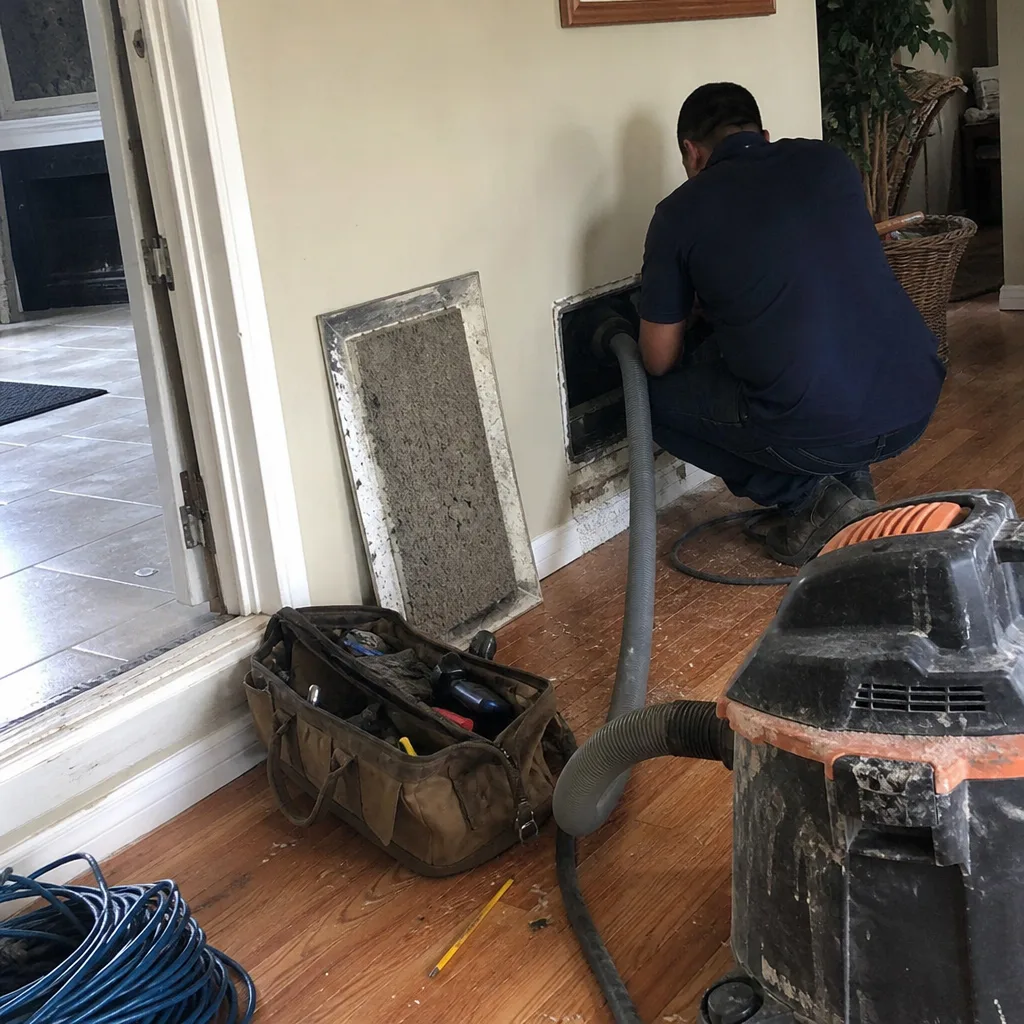 Before
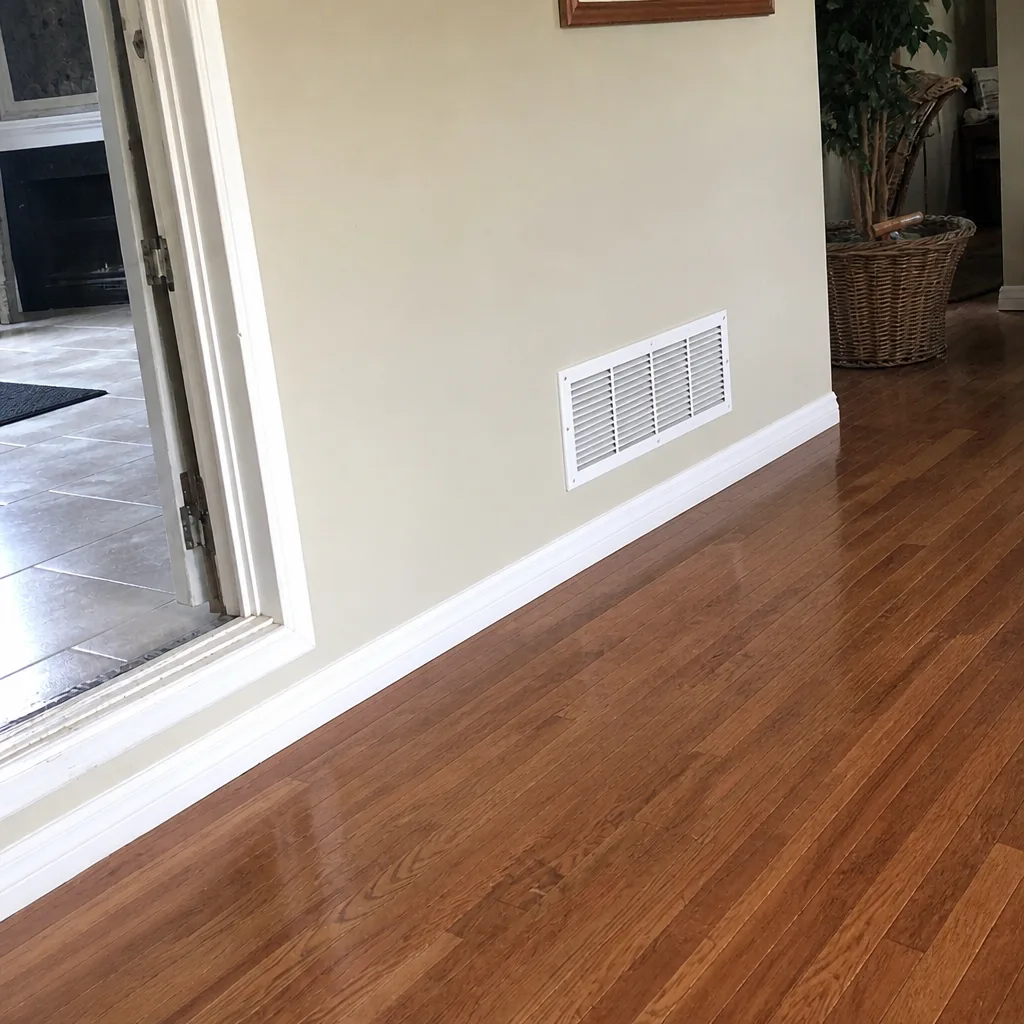 After